Every branch, one set of books
Running two or three branches on separate systems means every number gets counted twice — once locally, once at head office, and they rarely agree. Here is what changes when they share one.
Most distribution businesses do not start with multiple branches. They open a second one because demand justified it, put a copy of the system on a machine there, and carry on. It works, right up until head office asks a question that spans both — what is our total stock of an item, what does one customer owe us in total, which branch is actually profitable — and the only way to answer is to export two spreadsheets and hope the definitions match.
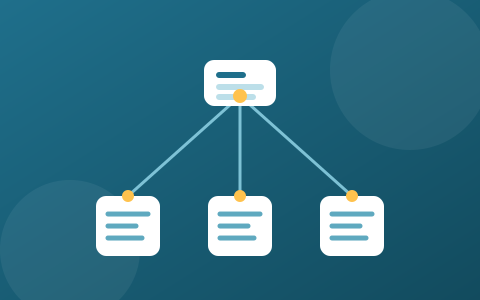
The alternative is one system where a branch is a dimension rather than an installation. Every document knows which branch raised it. Stock is held per location. Users see their own branch by default, and a head-office user can look across all of them without exporting anything. The consolidated number is not assembled at month end; it is simply what the system already holds.
The part that surprises people is document numbering. When branches run separately, two invoices numbered 1041 can exist in the same business, and nobody notices until they are put side by side. On a shared system each branch keeps its own sequence and the numbers stay distinct by construction, so an invoice number means one document and only one.
It also changes what a report is for. When head office and branch read the same data, a report stops being a reconciliation exercise and becomes an operational one. Nobody is checking whether the numbers agree, because there is only one set. The time that used to go into assembling the figure goes into acting on it instead.
None of this requires closing branches down or moving everyone to one office. It requires the branches to stop being separate systems that happen to belong to the same company.